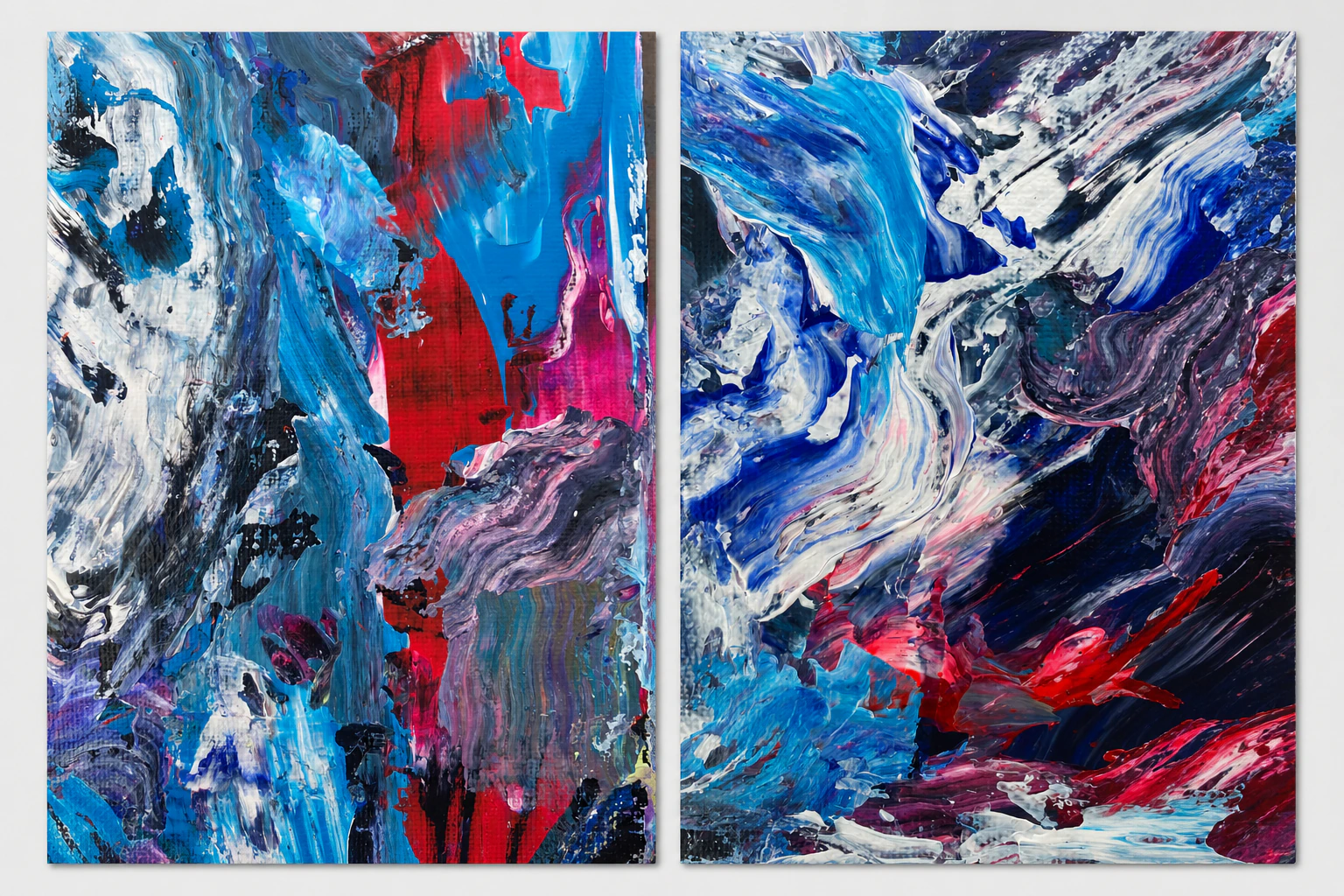
A textured painting changes as you move around it. Raised pigment catches the light, incisions deepen into shadow and metallic surfaces shift with the hour. The work refuses to be understood from one fixed viewpoint.
Surface becomes memory
Layers reveal time. A buried colour may survive at the edge; a crack records drying, pressure or deliberate fracture. These traces resemble memory itself --- accumulated, revised and never perfectly smooth.
Texture makes time visible. It allows the history of making to remain inside the finished work.
The emotional language of materials
Soft matte areas can feel private and inward. Gloss produces alertness. Scraping may suggest removal or resistance, while gold can signal repair, devotion or the value discovered after hardship. Material is never only decoration when it carries the logic of the work.
Why texture is different in person
Photography translates a three-dimensional surface into a flat image. It can show composition, but not the full choreography of light and distance. This is why collectors often feel a textured work is more alive in person than on a screen.
Living with a textured artwork
Place it where natural or directional light can move across the surface, while avoiding harsh direct sunlight. Side lighting emphasises relief. Because texture can hold dust, use a soft dry brush and never apply household cleaner to the artwork.
A materially rich painting rewards long attention. It does not reveal everything at once --- and that is precisely its power.